


A rubber extruder machine is a crucial piece of equipment in the rubber processing industry. As a leading supplier of rubber extruder machines, I am excited to delve into the details of what these machines are, how they work, and their various applications.
What is a Rubber Extruder Machine?
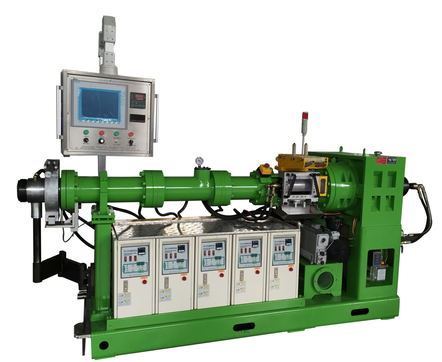
A rubber extruder machine is a device used to shape rubber compounds into continuous profiles with a consistent cross - section. It operates on the principle of forcing a rubber material through a die, which is a specially designed tool that gives the rubber its desired shape. The process involves several key components and steps that work in harmony to produce high - quality rubber products.
The basic components of a rubber extruder machine include a hopper, a screw, a barrel, and a die. The hopper is where the raw rubber material is loaded. This rubber can be in the form of pre - mixed compounds or natural rubber that has been processed to a certain degree. The screw, which is located inside the barrel, rotates and conveys the rubber material from the hopper towards the die. As the screw turns, it also applies pressure and heat to the rubber, which helps to soften it and make it more malleable.
The barrel is heated to a specific temperature to further aid in the softening and flow of the rubber. The temperature is carefully controlled to ensure that the rubber reaches the optimal state for extrusion without being over - heated, which could cause degradation of the material. Once the rubber reaches the end of the barrel, it passes through the die. The die is custom - made according to the shape and size requirements of the final product. It can be used to create a wide variety of shapes, such as tubes, rods, seals, and profiles for automotive, construction, and industrial applications.
Types of Rubber Extruder Machines
There are several types of rubber extruder machines, each with its own unique features and applications.
Cold Feed Extruder Equipment
One of the most common types is the cold feed extruder. Cold feed extruders are designed to process rubber at relatively low temperatures. They are capable of handling large volumes of rubber without the need for pre - heating the material. This makes them highly efficient for continuous production processes. The cold feed extruder uses a large - diameter screw to convey and compress the rubber, which is fed directly into the machine in a cold state. For more information about cold feed extruder equipment, you can visit Cold Feed Extruder Equipment.
Rubber Strainer Extruder
Another type is the rubber strainer extruder. This machine is primarily used to remove impurities from the rubber compound before extrusion. It consists of a fine - mesh screen or a series of screens that filter out any foreign particles, such as dirt, metal fragments, or other contaminants. The rubber is forced through the screens under high pressure, leaving behind a clean and homogeneous rubber material. This is especially important for applications where the quality and purity of the rubber are critical, such as in the production of medical devices or high - precision industrial components. To learn more about rubber strainer extruders, click on Rubber Strainer Extruder.
Cold Feed Rubber Extruder Machine
The cold feed rubber extruder machine is similar to the cold feed extruder but is specifically designed for rubber processing. It offers precise control over the extrusion process, allowing for the production of high - quality rubber products with consistent dimensions and properties. This type of machine is widely used in the automotive, construction, and consumer goods industries. For detailed information about cold feed rubber extruder machines, check out Cold Feed Rubber Extruder Machine.
How Does a Rubber Extruder Machine Work?
The working process of a rubber extruder machine can be divided into several stages.
Feeding
The first stage is the feeding stage. The raw rubber material is loaded into the hopper of the extruder. Depending on the type of extruder, the rubber can be in the form of granules, pellets, or pre - mixed compounds. The hopper is designed to ensure a continuous and even flow of the material into the screw.
Conveying and Compression
Once the rubber enters the barrel, the screw starts to rotate. As the screw turns, it conveys the rubber along the barrel towards the die. At the same time, the screw compresses the rubber, increasing its pressure and density. This compression helps to remove any air bubbles that may be present in the rubber and ensures a more uniform material flow.
Heating and Plasticizing
As the rubber moves through the barrel, it is heated to a specific temperature. The heat is transferred from the barrel walls to the rubber, which softens it and makes it more fluid. The heating process is carefully controlled to ensure that the rubber reaches the optimal viscosity for extrusion. This stage is crucial for achieving good quality and consistent extrusion results.

Extrusion through the Die
Finally, the softened and plasticized rubber reaches the end of the barrel and passes through the die. The die is the heart of the extrusion process, as it determines the shape and size of the final product. The rubber is forced through the die under high pressure, taking on the shape of the die opening. After passing through the die, the extruded rubber is cooled, either by air or water, to set its shape.
Applications of Rubber Extruder Machines
Rubber extruder machines have a wide range of applications in various industries.
Automotive Industry
In the automotive industry, rubber extruder machines are used to produce a variety of components, such as weatherstripping, seals, hoses, and gaskets. These components play a crucial role in ensuring the performance, safety, and comfort of vehicles. For example, weatherstripping helps to keep out water, air, and noise, while seals prevent leaks in engines and other critical systems.
Construction Industry
The construction industry also relies heavily on rubber extruder machines. Rubber profiles are used for window and door seals, expansion joints, and waterproofing membranes. These products help to improve the energy efficiency and durability of buildings by preventing air and water infiltration.
Industrial Applications
In industrial applications, rubber extruder machines are used to produce conveyor belts, rollers, and other rubber - based components. These components are essential for the smooth operation of manufacturing processes, such as material handling, packaging, and food processing.
Advantages of Using Our Rubber Extruder Machines
As a supplier of rubber extruder machines, we offer several advantages to our customers.
High - Quality Machines
Our machines are built with the latest technology and high - quality materials, ensuring reliable and long - lasting performance. We use advanced manufacturing processes to produce machines that are precise, efficient, and easy to operate.
Customization
We understand that different customers have different requirements. That's why we offer customized solutions for our rubber extruder machines. We can design and manufacture machines according to your specific needs, including the size, shape, and performance requirements of the final product.
Technical Support
We provide comprehensive technical support to our customers. Our team of experts is available to assist you with installation, operation, maintenance, and troubleshooting of our machines. We also offer training programs to ensure that your staff can operate the machines safely and efficiently.
Cost - Effectiveness
Our rubber extruder machines are designed to be cost - effective. They offer high productivity and low energy consumption, which helps to reduce your production costs in the long run.
Conclusion
In conclusion, a rubber extruder machine is a versatile and essential piece of equipment in the rubber processing industry. It offers a wide range of benefits, including the ability to produce high - quality rubber products with consistent dimensions and properties. Whether you are in the automotive, construction, or industrial sector, a rubber extruder machine can help you meet your production needs.
If you are interested in purchasing a rubber extruder machine or have any questions about our products, please feel free to contact us. We look forward to discussing your requirements and providing you with the best solutions for your rubber processing needs.
References
- "Rubber Extrusion Technology" by John Doe
- "Handbook of Rubber Extrusion" by Jane Smith


