


Hey there! As a supplier of Rubber Extruder Machines, I've been getting a lot of questions lately about the screw design principle of these machines. So, I thought I'd take some time to break it down for you all.
First off, let's talk about what a rubber extruder machine actually does. In simple terms, it's a device that forces rubber through a die to create a specific shape. The screw inside the extruder plays a crucial role in this process. It's like the heart of the machine, pushing and mixing the rubber along the barrel towards the die.
The Basics of Screw Design
The design of the screw in a rubber extruder machine is based on several key principles. One of the most important is the concept of conveying, melting, and pumping the rubber. The screw is divided into different zones, each with a specific function.
Feed Zone
The feed zone is where the rubber enters the extruder. Here, the screw has a relatively deep channel. This deep channel allows the rubber to be easily fed into the extruder. The flights of the screw in this zone are designed to grab the rubber and start moving it forward. The screw's rotation creates a dragging force that pulls the rubber from the hopper and into the barrel.
Compression Zone
As the rubber moves from the feed zone to the compression zone, the channel depth of the screw gradually decreases. This reduction in channel depth compresses the rubber. Compression is important for several reasons. Firstly, it helps to remove any air pockets that might be present in the rubber. Secondly, it increases the pressure on the rubber, which is necessary for proper melting and mixing. The compression ratio, which is the ratio of the channel depth in the feed zone to that in the metering zone, is a critical parameter in screw design. A higher compression ratio generally means better compression and mixing, but it also requires more power from the motor.
Metering Zone
The metering zone is the final section of the screw. In this zone, the channel depth is constant. The main function of the metering zone is to pump the melted and well - mixed rubber at a consistent rate towards the die. The screw in this zone ensures that the pressure and flow of the rubber are stable, which is essential for producing a high - quality extruded product.
Factors Affecting Screw Design
There are several factors that can affect the design of the screw in a rubber extruder machine.
Rubber Type
Different types of rubber have different properties, such as viscosity, elasticity, and melting point. For example, natural rubber has different flow characteristics compared to synthetic rubber. A screw designed for a low - viscosity rubber may not work well for a high - viscosity rubber. High - viscosity rubbers require a screw with a higher compression ratio and more aggressive flight design to ensure proper mixing and conveying.
Extrusion Speed
The desired extrusion speed also plays a role in screw design. If you need to extrude rubber at a high speed, the screw needs to be designed to handle the increased flow rate. This may involve increasing the diameter of the screw or adjusting the pitch of the flights. A higher pitch can increase the conveying capacity of the screw, allowing more rubber to be moved through the extruder in a given time.
Die Design
The design of the die at the end of the extruder also affects the screw design. Different dies have different flow resistance. A die with a complex shape or small opening will create more back - pressure on the screw. The screw needs to be able to generate enough pressure to overcome this back - pressure and ensure a smooth flow of rubber through the die.
Advanced Screw Design Features
Some modern rubber extruder machines use advanced screw designs to improve performance.
Barrier Screws
Barrier screws are a type of screw design that has an additional flight, called a barrier flight, in the compression zone. The barrier flight separates the solid rubber from the melted rubber. This separation allows for more efficient melting and mixing. The solid rubber is forced to stay in the deeper part of the channel, while the melted rubber flows over the barrier flight into a shallower channel. This design helps to prevent unmelted rubber from reaching the die.
Mixing Sections
Many screws also have mixing sections. These sections are designed to further improve the mixing of the rubber. They can have various shapes, such as pins, knobs, or special flight configurations. Mixing sections break up the rubber flow and create turbulence, which helps to distribute additives evenly throughout the rubber and ensure a homogeneous product.
Our Range of Rubber Extruder Machines
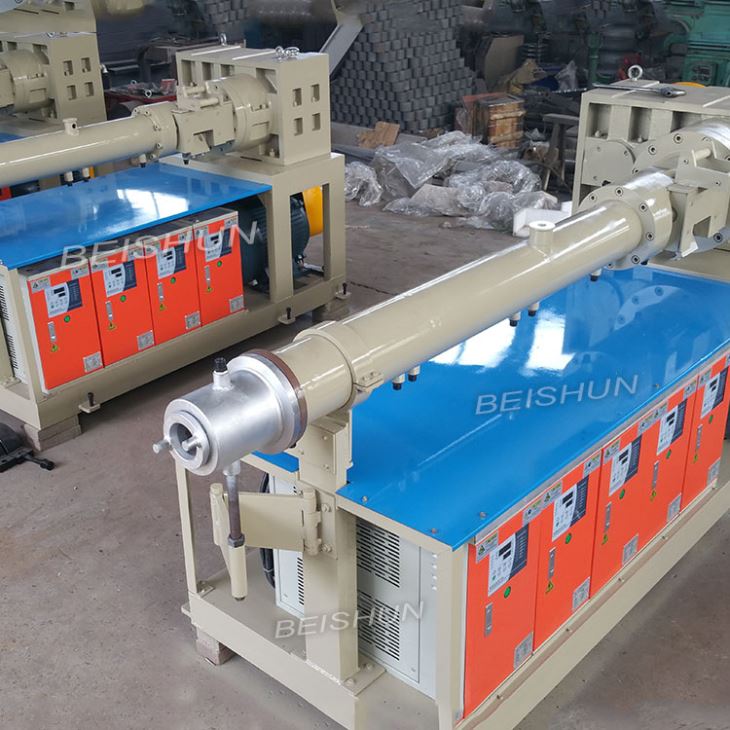
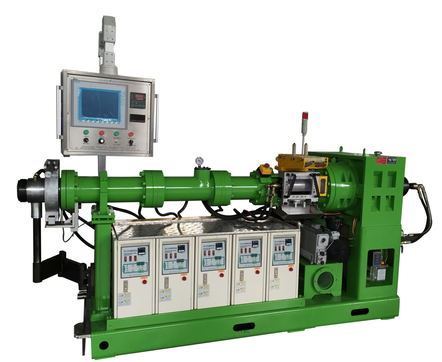
At our company, we offer a wide range of Rubber Extrusion Machine. Our Cold Feed Rubber Extruder Machine is designed to handle rubber at lower temperatures, which is ideal for some applications. It uses a screw design that is optimized for cold feed processing, ensuring efficient conveying and mixing of the rubber.
We also have Cold Feed Extruder Equipment that is suitable for continuous production. These machines are built with high - quality screws that are designed to meet the specific requirements of different rubber types and production speeds.
Conclusion
The screw design principle of a rubber extruder machine is a complex but crucial aspect of the extrusion process. A well - designed screw can improve the quality of the extruded product, increase production efficiency, and reduce energy consumption. Whether you're looking for a cold feed extruder or a general rubber extrusion machine, understanding the screw design can help you make the right choice.
If you're in the market for a rubber extruder machine, we'd love to talk to you. Our team of experts can help you select the right machine based on your specific needs. Don't hesitate to reach out to us for more information or to start a procurement discussion.
References
- Tadmor, Z., & Gogos, C. G. (2006). Principles of Polymer Processing. Wiley - Interscience.
- Rauwendaal, C. (2014). Polymer Extrusion. Hanser Publishers.


