


As a leading supplier of rubber crusher machines, I often encounter inquiries from clients about the types of rubber that our machines can process. In this blog post, I'll delve into the various kinds of rubber materials that our rubber crusher machines are capable of handling, providing you with a comprehensive understanding of their versatility and efficiency.
1. Natural Rubber
Natural rubber, derived from the latex of rubber trees, is one of the most common types of rubber processed by our machines. It is known for its high elasticity, excellent resilience, and good abrasion resistance. Natural rubber is widely used in the manufacturing of tires, conveyor belts, hoses, and various rubber products.
Our rubber crusher machines can effectively break down natural rubber scrap, such as used tires and rubber waste from rubber product manufacturing. The process starts with the initial shredding of the rubber material into smaller pieces using a Tire Shredder Machine. This pre - shredding step makes it easier for the subsequent crushing process. Then, the rubber pieces are fed into the rubber crusher, where they are further reduced into smaller particles. These particles can be reused in the production of new rubber products, reducing the need for virgin rubber and promoting environmental sustainability.
2. Synthetic Rubber
Synthetic rubber is artificially produced through chemical synthesis and offers a wide range of properties tailored to specific applications. Some common types of synthetic rubber include styrene - butadiene rubber (SBR), nitrile rubber (NBR), and ethylene - propylene - diene monomer (EPDM).
- Styrene - Butadiene Rubber (SBR): SBR is the most widely used synthetic rubber, accounting for a large portion of the global rubber market. It is commonly used in tire manufacturing, as well as in the production of shoe soles, gaskets, and seals. Our rubber crusher machines can handle SBR waste effectively, reducing it to a granular form that can be recycled into new rubber products.
- Nitrile Rubber (NBR): NBR is known for its excellent oil and fuel resistance, making it suitable for applications in the automotive and aerospace industries, such as oil seals and fuel hoses. Our machines can process NBR waste, allowing for the recovery of valuable rubber materials and reducing waste disposal costs.
- Ethylene - Propylene - Diene Monomer (EPDM): EPDM has good weather resistance, heat resistance, and electrical insulation properties. It is commonly used in roofing membranes, automotive seals, and electrical cable insulation. Our rubber crusher can crush EPDM rubber waste into small particles, which can be used in the production of new EPDM products or as a filler in other rubber compounds.
3. Recycled Rubber
Recycled rubber is made from reclaimed rubber waste, such as used tires and rubber products. Recycling rubber not only helps to reduce environmental pollution but also conserves natural resources. Our rubber crusher machines play a crucial role in the rubber recycling process.
The recycled rubber can be processed into different grades of rubber powder, depending on the requirements of the end - user. For example, fine rubber powder can be used in the production of rubber mats, sports surfaces, and asphalt modifiers, while coarser rubber powder can be used as a filler in rubber compounding. Our machines are designed to produce high - quality rubber powder with a uniform particle size distribution, ensuring the consistency and performance of the recycled rubber products.
4. Thermoplastic Rubber
Thermoplastic rubber (TPR), also known as thermoplastic elastomer (TPE), combines the properties of rubber and plastic. It has the elasticity of rubber and the processability of plastic, making it easy to mold and recycle. TPR is used in a wide range of applications, including consumer products, automotive parts, and medical devices.
Our rubber crusher machines can process TPR waste, breaking it down into small pieces that can be remelted and reused in the production of new TPR products. This not only reduces waste but also lowers the production cost for manufacturers.
5. Silicone Rubber
Silicone rubber is a high - performance elastomer with excellent heat resistance, chemical resistance, and electrical insulation properties. It is commonly used in the electronics, medical, and aerospace industries.
Although silicone rubber is more difficult to process compared to other types of rubber due to its high viscosity and cross - linked structure, our advanced rubber crusher machines are capable of handling silicone rubber waste. After crushing, the silicone rubber particles can be further processed and reused in the production of new silicone rubber products.
The Process of Rubber Crushing
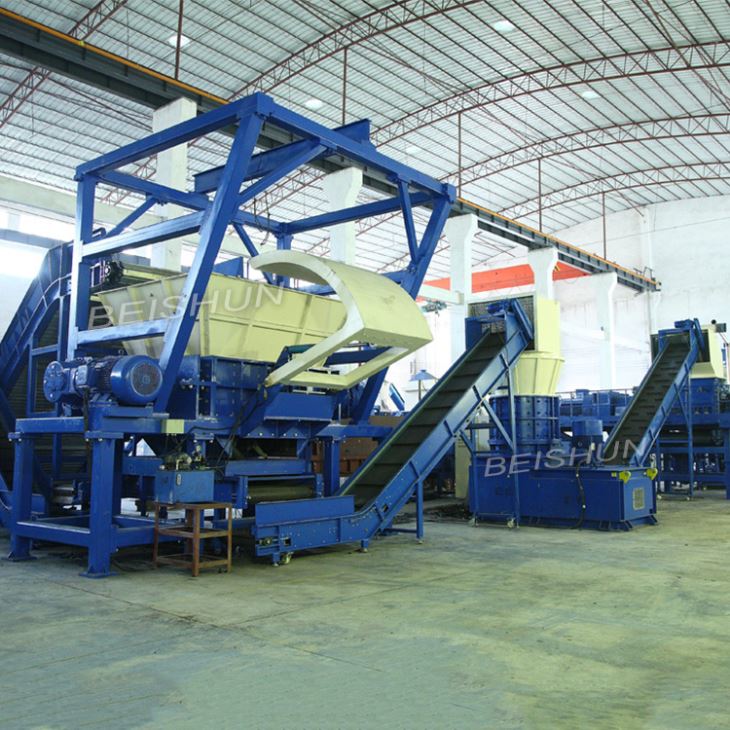
The process of rubber crushing typically involves several steps. First, the rubber material is fed into a Tire Cutting Machine or a shredder to reduce its size. This pre - processing step helps to improve the efficiency of the subsequent crushing process.
Next, the shredded rubber pieces are transferred to the rubber crusher. The crusher uses a combination of mechanical force and cutting action to break the rubber into smaller particles. The size of the particles can be controlled by adjusting the settings of the crusher.

After crushing, the rubber particles may go through a screening process to separate the particles of different sizes. The fine rubber powder can be further processed using a Rubber Grinding Machine to achieve a more uniform particle size and improve its quality.
Advantages of Using Our Rubber Crusher Machines
- High Efficiency: Our machines are designed with advanced technology and high - quality components, ensuring high - speed and efficient rubber crushing.
- Versatility: As demonstrated above, our machines can process a wide range of rubber materials, including natural rubber, synthetic rubber, recycled rubber, thermoplastic rubber, and silicone rubber.
- Quality Output: The rubber particles produced by our machines have a uniform size distribution and high quality, which is suitable for various recycling and re - manufacturing applications.
- Environmental Friendliness: By recycling rubber waste, our machines help to reduce environmental pollution and conserve natural resources.
Conclusion
Our rubber crusher machines are highly versatile and can process a wide variety of rubber materials, including natural rubber, synthetic rubber, recycled rubber, thermoplastic rubber, and silicone rubber. Whether you are a tire manufacturer, a rubber product recycler, or a company looking to reduce your rubber waste, our machines can provide you with an efficient and cost - effective solution.

If you are interested in our rubber crusher machines or have any questions about the types of rubber they can process, please feel free to contact us for more information and to discuss your specific requirements. We are committed to providing you with the best products and services to meet your needs.
References
- Morton, M. (Ed.). (1987). Rubber Technology. Van Nostrand Reinhold.
- Brydson, J. A. (1999). Rubber Chemistry and Technology. Rapra Technology.
- Lorenz, R. F., & Philippoff, W. (1983). Elastomers and Rubber Elasticity. Springer - Verlag.


