


Vulcanization is a crucial process in the rubber industry, transforming raw rubber into a more durable and useful material. As a vulcanizing machine supplier, I've seen firsthand how the vulcanization time can vary widely depending on several factors. In this blog, I'll break down these factors to help you understand how they impact the overall vulcanization process.
1. Rubber Compound
The type of rubber compound used is one of the most significant factors affecting vulcanization time. Different rubber materials have distinct chemical compositions, which react differently to the vulcanization process. For instance, natural rubber (NR) generally has a faster vulcanization rate compared to synthetic rubbers like styrene - butadiene rubber (SBR) or nitrile rubber (NBR).
The presence of additives in the rubber compound also plays a role. Accelerators are chemicals that speed up the vulcanization reaction. Using a high - quality accelerator can significantly reduce the vulcanization time. On the other hand, retarders are used to slow down the reaction, which might be necessary in some cases to prevent premature vulcanization. Fillers, such as carbon black or silica, can also influence the vulcanization time. They can increase the heat transfer rate within the rubber, which may either speed up or slow down the process depending on their concentration and properties.
2. Temperature
Temperature is a key factor in vulcanization. The vulcanization reaction is highly temperature - dependent. Generally, increasing the temperature will accelerate the vulcanization process, reducing the time required to achieve the desired level of cross - linking in the rubber. However, there's a limit to how high the temperature can be raised. If the temperature is too high, it can cause the rubber to degrade or develop surface defects.
Most vulcanizing machines allow for precise temperature control. As a supplier, I often recommend customers to find the optimal temperature for their specific rubber compound. For example, some rubber compounds may vulcanize effectively at around 140 - 160°C, while others may require a higher temperature of 180 - 200°C. It's important to note that maintaining a consistent temperature throughout the vulcanization process is crucial for achieving uniform results.
3. Pressure
Pressure affects the vulcanization time in multiple ways. Firstly, applying pressure helps to ensure good contact between the rubber and the mold, which is essential for proper heat transfer. This can speed up the vulcanization process by allowing the heat to penetrate the rubber more evenly.
Secondly, pressure can influence the density of the rubber during vulcanization. Higher pressure can compress the rubber, reducing the distance between rubber molecules and facilitating the cross - linking reaction. However, excessive pressure can also cause problems, such as flash formation or deformation of the rubber product.
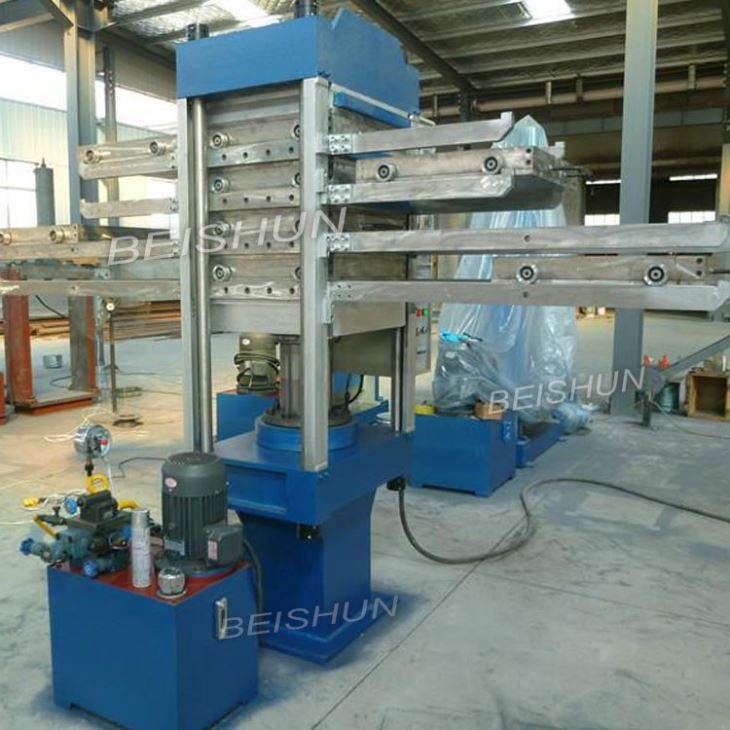

Our Frame Type Vulcanizing Press Machine is designed to provide precise pressure control, allowing customers to adjust the pressure according to their specific requirements. This helps in optimizing the vulcanization time and achieving high - quality rubber products.
4. Mold Design
The design of the mold used in the vulcanization process can have a significant impact on the vulcanization time. A well - designed mold will have proper ventilation channels, which allow air to escape during the vulcanization process. This prevents the formation of air bubbles in the rubber, which can slow down the vulcanization process and affect the quality of the final product.
The size and shape of the mold also matter. Larger molds may require more time for the heat to penetrate the entire rubber mass, increasing the vulcanization time. Complex shapes may also present challenges in terms of heat transfer, as some areas of the rubber may be more difficult to reach with heat compared to others.
Our Rubber Tile Vulcanizing Press is designed with optimized mold designs to ensure efficient heat transfer and uniform vulcanization, reducing the overall vulcanization time.
5. Machine Efficiency
The efficiency of the vulcanizing machine itself is an important factor. A high - quality machine will have better heat transfer capabilities, allowing it to heat the rubber more quickly and evenly. This can significantly reduce the vulcanization time.
The heating system of the machine is a critical component. Machines with advanced heating systems, such as electric heating or steam heating, can provide more precise temperature control and faster heating rates. Additionally, the insulation of the machine is important. Good insulation helps to retain heat, reducing heat loss and ensuring that the energy is used efficiently.
Our Full Automatic Rubber Vulcanizing Press is equipped with state - of - the - art heating and control systems, which not only improve the efficiency of the vulcanization process but also reduce the vulcanization time.
6. Product Thickness
The thickness of the rubber product being vulcanized is a straightforward factor affecting the vulcanization time. Thicker rubber products take longer to vulcanize because it takes more time for the heat to penetrate through the entire thickness of the rubber. For example, a thin rubber sheet may vulcanize in a matter of minutes, while a thick rubber block may require hours.
When dealing with thick rubber products, it's important to ensure that the heat is distributed evenly throughout the product. This may require adjusting the temperature, pressure, and vulcanization time accordingly.
Conclusion
In conclusion, the vulcanization time in a vulcanizing machine is affected by a variety of factors, including the rubber compound, temperature, pressure, mold design, machine efficiency, and product thickness. Understanding these factors and how they interact with each other is crucial for optimizing the vulcanization process.
As a vulcanizing machine supplier, I'm committed to providing high - quality machines that can help customers achieve efficient and high - quality vulcanization. If you're in the market for a vulcanizing machine or have any questions about the vulcanization process, feel free to reach out. We're here to assist you in finding the best solutions for your specific needs.
References
- Brydson, J. A. (1999). Rubber Chemistry. Oxford University Press.
- Morton, M. (1995). Rubber Technology. Van Nostrand Reinhold.


