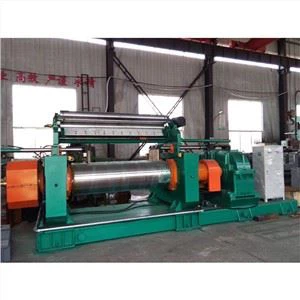
Modern rubber mixers are essential equipment in the rubber and elastomer processing industry, playing an instrumental role in initial stages of mixing rubber.
Core Functions
Uniform Dispersion of Compounding
Internal or open internal mixers use mechanical shear forces to evenly disperse solid or liquid compounding ingredients like carbon black and vulcanizing agents into raw rubber for use as multiphase colloidal systems, creating consistent compound properties and properties.
Optimizing Compound Properties
The mixing process can alter both physical and mechanical properties of rubber compounds, including hardness, elasticity, and wear resistance. Tire compounds often need extra reinforcement while sealant compounds require greater uniformity.
Increase Processing Efficiency
Mixing can decrease the viscosity and flowability of plasticized raw rubber, improving subsequent molding processes such as calendering, extrusion and vulcanization.
Structure and Design
A rubber mixing mill typically consists of two heavy-duty steel rollers rotating at different speeds to produce friction ratios, which allows the gap between them to be adjusted according to desired sheet thickness. Modern machines feature sturdy frames, precision bearings and temperature control systems for long-lasting performance and reliable operation; its rollers may also be hardened, ground, or chrome plated for extra wear resistance and pressure tolerance.
Features
Modern rubber mixing mills incorporate advanced features designed to increase efficiency and operator safety. Many are equipped with automatic mixing mechanisms that evenly disperse rubber compounds across roller surfaces for reduced manual intervention and enhanced mixing quality, variable speed drives with digital control panels enabling precise adjustments of roller speed and friction ratio, cooling/heating systems that maintain stable processing temperatures for compound quality assurance, variable speed drives with digital control panels for precise roller speed/friction ratio adjustment as well as cooling/heating systems to keep processing temperatures stable in order to preserve quality compounds.
Safety has become a paramount consideration in modern designs. Emergency stops, protective guards and automatic reversal systems have become standard features to reduce accidents.
Applications
Rubber mixing mills are commonly employed in the production of tires, belts, hoses, seals, footwear and various molded rubber products such as tires. They are effective at compounding both natural and synthetic rubber compounds. Research laboratories and testing facilities also employ small laboratory mixers for sample preparation and formulation development.
Conclusion
Modern rubber mixing mill remain at the core of rubber processing technology. While newer equipment such as internal mixers and twin-screw extruders may also be utilized, two-roll mixers remain widely acclaimed due to their simplicity, versatility, and efficiency. With integrated advanced control systems, improved safety mechanisms, and energy saving features these two-roll mixers provide manufacturers with reliable solutions for producing top quality compounds in today's highly competitive industry.
Hot Tags: modern rubber mixing mill, China, manufacturers, suppliers, factory, customized, rubber mixing mill supply, manual rubber mixing mill, twin roll rubber mixing mill, rubber mixing mill supplier, rubber production mill, industrial use rubber mixing mill