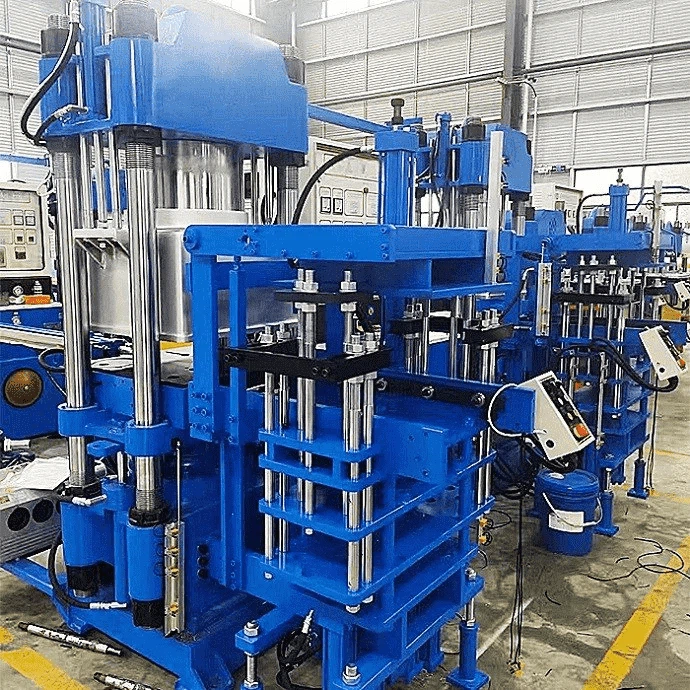
The modern rubber mixing mill is crucial foundational equipment in the rubber and elastomer processing value chain. It undertakes the initial mixing tasks of the formulation system and is an indispensable core link in the overall manufacturing system for tires, sealing products, conveyor belts, rubber hoses, shoe materials, and more. In modern rubber processing, the operational quality and efficiency of the mixing mill directly affect the dispersion uniformity and processability of the rubber compound, as well as the molding and vulcanization performance in subsequent processes. It serves as the "source stabilizer" at the production end.
The fundamental process of a mixing mill is to utilize compression, friction, and shear forces between the rollers to achieve uniform dispersion of solid or liquid additives in the raw rubber, thereby forming a multiphase rubber compound system. Functional components such as carbon black, accelerators, and sulfur must be evenly distributed to ensure that the physical, mechanical, and long-term durability properties of the rubber compound meet application requirements. In the tire industry, to enhance wear resistance and strength, the mixing process places greater emphasis on high-intensity dispersion, whereas for high-consistency products such as seals, higher standards for uniformity and stability are required.
The mixing process can effectively alter the viscosity, elasticity, and fluidity of the rubber compound, enabling better processing performance in subsequent operations such as calendering, extrusion, and molding. For instance, by appropriately controlling roller spacing, friction ratio, and roller surface temperature, the viscosity of the rubber compound can be significantly reduced, making it easier to plasticize. This, in turn, enhances production efficiency and improves product quality.
In terms of structural design, modern rubber plasticizing machines are generally composed of two heavy-duty alloy steel rollers, a frame, a bearing system, a roller spacing adjustment mechanism, a transmission system, and a temperature control system. The rollers rotate in opposite directions at different speeds to form a friction ratio, which is the basic driving mechanism for completing the mixing process. The roller spacing can be precisely adjusted according to the required sheet thickness, and the temperature control system ensures stable roller surface temperature and prevents rubber scorching or insufficient mixing. To meet the requirements of high-intensity continuous mixing, the roller surfaces are often hardened, finely ground, or chrome-plated to enhance wear resistance and load-bearing capacity, thereby extending equipment service life and reducing maintenance costs.
With the acceleration of modernization in the rubber industry, the functional modules of modern plasticizing machines are evolving toward digitalization and intelligent control. Advanced models generally feature automatic mixing mechanisms that reduce manual intervention and improve the efficiency of formula dispersion; variable frequency drives and digital operating interfaces can finely adjust roll speed and friction ratio; and temperature control systems, relying on automatic cooling/heating management, can ensure stable temperatures during the mixing process and guarantee consistent rubber material quality. At the same time, safety technology has become a common focus across the industry. Emergency stop devices, protective covers, chest impact bars, and automatic reversing systems have all become standard configurations to reduce on-site operational risks.
Modern rubber plasticizing machines have extensive application scenarios along the industrial chain, covering fields such as tires, conveyor belts, rubber hoses, seals, and shoe materials. They are also frequently used by laboratories and research and development centers for formula development, process verification, and small-scale batch production. This makes the plasticizing machine not only production equipment, but also an important platform for material research and development.
In industrial practice, manufacturing enterprises such as Qingdao Beishun Environmental Technology Co., Ltd. have been continuously optimizing the safety, mixing efficiency, and structural strength of modern rubber mixing mills. By improving roller material processing, upgrading temperature control systems, and optimizing transmission structures, they have promoted the development of rubber mixing equipment toward higher precision, greater reliability, and enhanced sustainability.
Overall, although new equipment such as internal mixers and twin-screw mixing systems continues to be developed, the modern two-roll open mill still holds a core position in the rubber processing industry due to its advantages of simple structure, flexible operation, convenient maintenance, and strong adaptability. It will continue to upgrade and evolve under the momentum of digitalization and intelligent manufacturing trends.