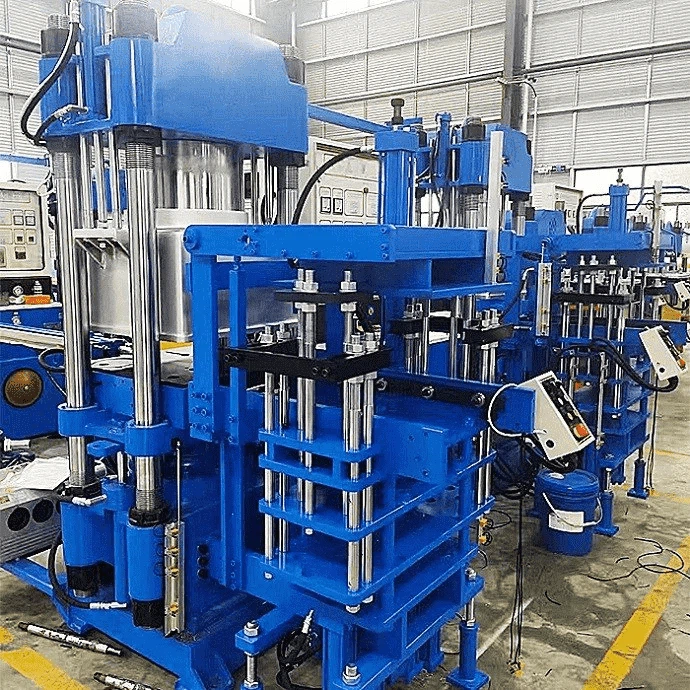
In today's end-of-life tire (ELT) market, the business model is rapidly shifting from "disposal" to "resource recovery." A modern tire recycling project is no longer judged by whether it can shred tires, but by whether it can run continuously, produce consistent output, and generate sellable rubber products with predictable costs. That's why a high-reliability tire shredder recycling line often becomes the single biggest factor that determines your project's ROI.
The ELT Opportunity Is Real-but ROI Is Won in Operations
Clean rubber crumb and powder rubber have quickly become indispensable components in high-demand applications such as modified asphalt, sports surfaces, shock absorption, sound insulation and rubber remanufacturing. But turning tires into commercial grade material doesn't just involve installing equipment - its ROI relies on operational performance criteria such as uptime, labor efficiency, maintenance cost management and product consistency - for example when your line stops frequently or consumes excessive labor; cost per ton increases significantly and its payback period lengthens further.
A Mature Recycling Line Turns "Difficult Material" into Standardized Products
- A complete tire recycling system typically follows a structured processing logic:
- Shredding reduces whole tires into manageable rubber pieces for stable conveying and downstream processing.
- Grinding and granulation refine the material into uniform crumb.
- Screening and sizing control helps produce standard outputs like 30/20/10mm, aligned with market demand.
- Further processing can produce powder rubber (5–80 mesh) to meet broader application needs.
This process chain is only profitable when each step runs steadily. In real projects, the shredder is not just "the first machine"-it is the capacity gatekeeper and the wear-and-failure hotspot. Reliability here protects the entire investment.
Translating Equipment Design into Financial Outcomes (BEISHUN Perspective)
A high-reliability line is built around repeatable production-not just headline power or speed. Based on BEISHUN's design direction, several features align directly with ROI performance:
- High automation + simple operation: With only 3–5 operators per shift, labor cost and training time are reduced, making the project easier to scale and manage.
- Bolt-installed blades: Fast replacement improves maintenance efficiency and reduces unplanned downtime.
- Four cutting edges per blade: Each blade can be renewed multiple times, lowering consumable cost per ton and improving cost predictability.
- Screen-controlled output sizing: Products can be stabilized at common sizes such as 30/20/10mm, enabling you to serve different markets without rebuilding the line.
- HARDOX500 wear-resistant protection: Extends equipment lifetime and protects major components-key for long-term ROI.
- Electrical + mechanical load protection: Reduces risk of catastrophic damage from overload or foreign materials.
- Hydraulic-assisted maintenance structure: Makes blade replacement and servicing more efficient, tightening the maintenance window and improving uptime.
In business terms, these features convert into three results: more runtime, lower total maintenance burden, and a more consistent, higher-value output.
Tire Type Flexibility Expands Your Revenue Base
A reliable recycling line should handle a wide range of tires-car, truck, passenger, agricultural, tractor, forklift, OTR, mining, and even aircraft tires. The more tire types a system can process, the larger your sourcing radius and the stronger your raw-material advantage. But wider adaptability only matters when the system is engineered with durability and protection to match high-load conditions.
Clean Output Is What Creates Market Value
Buyers don't pay for "shredded tires." They pay for clean, standardized crumb and powder with stable sizing and minimal contamination-because that lowers their own processing cost and improves product performance. If your system produces cleaner rubber crumb and powder rubber consistently, you position your output for better pricing and repeat orders.
ROI Starts with the Right Project Inputs
To build a line that meets ROI expectations, professional suppliers typically confirm: tire types and size range, target capacity, desired output sizes (crumb or powder mesh), site layout and power conditions, and compliance requirements. With these parameters, the system can be designed for stable production rather than "overspec guessing," which often causes either wasted CapEx or underperformance.
Final Takeaway
In ELT recycling, a tire shredder line is not just equipment-it is the engine of your cashflow. High reliability protects uptime, controls operating costs, stabilizes product quality, and keeps the entire investment running as planned. If you want predictable payback, the best strategy is to choose a recycling line engineered for real-world durability, fast maintenance, and consistent output-not just theoretical capacity.
If you share your tire types, required capacity, and target output size/mesh, BEISHUN can match a customized shredding and recycling configuration designed to maximize uptime and project ROI.