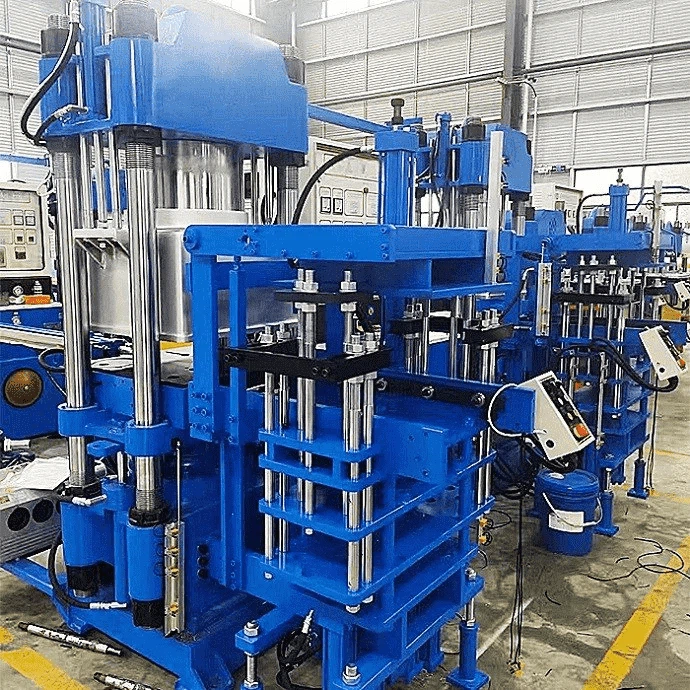
Changes in product performance and the "three elements" of vulcanization by drum vulcanizers
In the production process of products, vulcanization is the last process (vulcanization equipment mainly includes drum vulcanizers, flat vulcanizers, inner tube vulcanizers, etc.). In this process, the rubber undergoes a series of complex chemical reactions, changing from a linear structure to a body structure, losing the plasticity of the compound rubber and gaining the high elasticity of the cross-linked rubber, thereby obtaining excellent physical and mechanical properties, heat resistance Sex, solvent resistance and corrosion resistance improve the use value and application range of rubber products.
Before vulcanization: linear structure, molecules interact with van der Waals force;
Performance: high plasticity, high elongation, soluble;
During vulcanization: molecules are initiated and chemical cross-linking reactions occur;
After vulcanization: network structure, the molecules are chemically bonded;
structure:
(1) chemical bond;
(2) The position of the crosslink;
(3) degree of cross-linking;
(4) Crosslink density;
performance:
(1) Mechanical properties (determined tensile strength. Hardness tensile strength. Elongation. Elasticity);
(2) Physical properties;
(3) chemical stability after vulcanization;
The performance change of rubber: taking natural rubber as an example, with the increase of vulcanization degree;
(1) Changes in mechanical properties (elasticity. Tear strength. Elongation strength. Tear strength. Hardness) increase (elongation. Compression deformation. Fatigue heat generation) decrease;
(2) Changes in physical properties, air permeability and water permeability decrease cannot be dissolved, only swelling and heat resistance can be improved;
(3) Changes in chemical stability The chemical stability is improved, the reason:
a. The cross-linking reaction makes the chemically active groups or atoms no longer exist, making it difficult to carry out the aging reaction; .
b. The network structure hinders the diffusion of low molecules, making it difficult for rubber free radicals to diffuse
Selection and determination of rubber vulcanization conditions
1. Vulcanization pressure
(1) Rubber products need to apply pressure when they are vulcanized. The purpose is to:
a. Prevent bubbles in the rubber material and improve the compactness of the rubber material;
b. Make the rubber material flow and fill the mold to make products with clear patterns;
c. Improve the adhesion between each layer (adhesive layer and cloth layer or metal layer, cloth layer and cloth layer) in the product, and improve the physical properties of vulcanized rubber (such as flex resistance).
(2) In general, the selection of vulcanization pressure should be determined according to the product type, formulation, plasticity and other factors.
(3) In principle, the following rules should be followed: the plasticity is large, the pressure should be smaller; the product is thick, the number of layers is large, and the structure is complex. The pressure should be higher; Several:
(1) The hydraulic pump transmits the pressure to the mold through the flat vulcanizing machine, and then the mold transmits the pressure to the rubber;
(2) Directly pressurized by vulcanization medium (such as steam);
(3) Pressurized by compressed air;
(4) Inject by injection machine.
Curing temperature and curing time
The vulcanization temperature is the basic condition of the vulcanization reaction. The level of vulcanization temperature can directly affect the vulcanization speed, product quality and economic benefits of the enterprise. High vulcanization temperature, fast vulcanization speed and high production efficiency; otherwise, low production efficiency.
Increasing the vulcanization temperature can lead to the following problems;
(1) Cause the rubber molecular chain to crack and vulcanize back to the original, resulting in a decrease in the mechanical properties of the rubber;
(2) Reduce the strength of textiles in rubber products;
(3) The scorch time of the rubber material is shortened, the filling time is reduced, and the product is partially lacking glue;
(4) Because thick products will increase the temperature difference between the inside and outside of the product, resulting in uneven vulcanization.
The selection of vulcanization temperature should comprehensively consider factors such as the type of rubber, vulcanization system and product structure.
The suitable vulcanization temperature of various rubbers is generally:
NR<143°C; SBR<180°C; IR, BR, CR<151°C; IIR< 170°C; NBR< 180°C