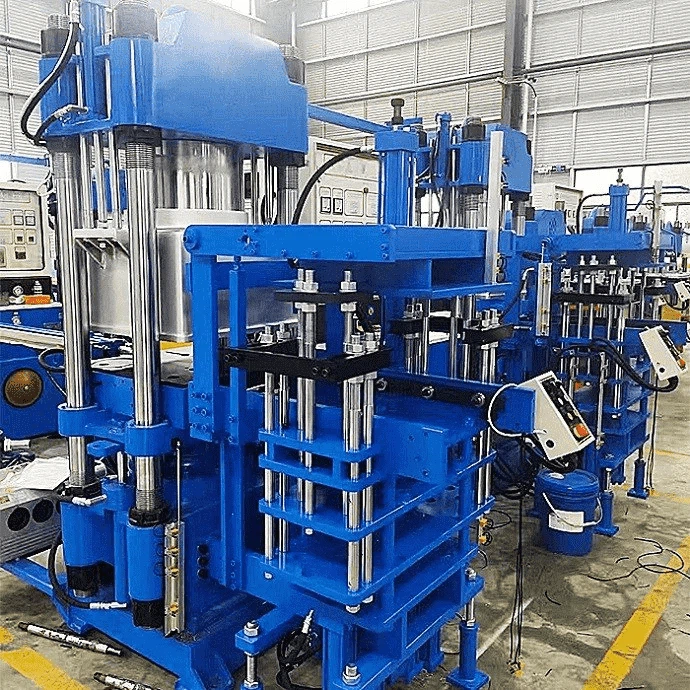
Flat Vulcanizing Machines play a pivotal role in the rubber industry, where they are essential for the vulcanization process. This process transforms raw rubber into more durable, elastic materials by adding sulfur or other accelerators. Vulcanized rubber has enhanced strength, elasticity, and resistance to heat, making it suitable for a wide range of applications.
Introduction to Vulcanization
Vulcanization is a chemical process that involves heating raw rubber in the presence of sulfur. The sulfur atoms form cross-links between the polymer chains of the rubber, creating a three-dimensional network that imparts improved mechanical properties to the material. The process is typically carried out at elevated temperatures and under pressure to ensure uniform cross-linking.
Working Principle
Preparation
The vulcanization process begins with the preparation of the rubber compound. The raw rubber is mixed with sulfur and other accelerators, along with fillers and other additives, to create a homogeneous mixture. This mixture is then shaped into the desired form, such as sheets, belts, or molded parts.
Loading
The prepared rubber material is placed between the heated plates of the vulcanizing machine. In some cases, a release agent is applied to the plates to prevent the rubber from sticking.
Heating
Once the rubber material is loaded, the heating plates are activated. The temperature is gradually increased to the vulcanization point, typically ranging from 140°C to 180°C (284°F to 356°F), depending on the specific rubber compound and product requirements. The heating plates ensure uniform temperature distribution across the rubber surface.
Pressure Application
Simultaneously, the hydraulic system applies pressure to the rubber material. The pressure, combined with heat, ensures that the rubber flows evenly within the mold, filling all cavities and creating a uniform product. The pressure also helps in the formation of cross-links by bringing the sulfur atoms into close contact with the rubber polymer chains.
Vulcanization
During this phase, the rubber material undergoes chemical reactions, forming cross-links between the polymer chains. The duration of the vulcanization process varies depending on the rubber compound and the desired properties of the final product. It can range from a few minutes to several hours. The control system precisely monitors and adjusts the temperature and pressure to maintain optimal conditions.
Cooling
After the vulcanization process is complete, the rubber material must be cooled to stabilize the cross-linked structure. Some machines include integrated cooling systems that rapidly reduce the temperature of the rubber. Alternatively, the vulcanized rubber can be removed from the machine and allowed to cool at ambient temperature.
Unloading
Once the rubber has cooled and solidified, it is removed from the machine. The final product is inspected for quality and consistency before being packaged and prepared for use or further processing.
Advantages of Flat Vulcanizing Machines
Consistent Quality
The precise control of temperature and pressure ensures uniform vulcanization, resulting in high-quality rubber products with consistent properties.
Efficiency
They are designed for high efficiency, with automated systems that reduce manual labor and increase production rates.
Versatility
These machines can be used to vulcanize a wide range of rubber products, from tires and conveyor belts to gaskets and seals.
Durability
Built to withstand high temperatures and pressures, they are robust and durable, offering long service life with minimal maintenance.
The Flat Vulcanizing Machine is an essential tool in the rubber industry, enabling the transformation of raw rubber into durable, elastic materials. Understanding the working principles of these machines-from preparation and loading to heating, pressure application, vulcanization, and cooling-provides valuable insights into their operation and benefits. By ensuring consistent quality and efficiency, they play a crucial role in producing high-performance rubber products for a wide range of applications.