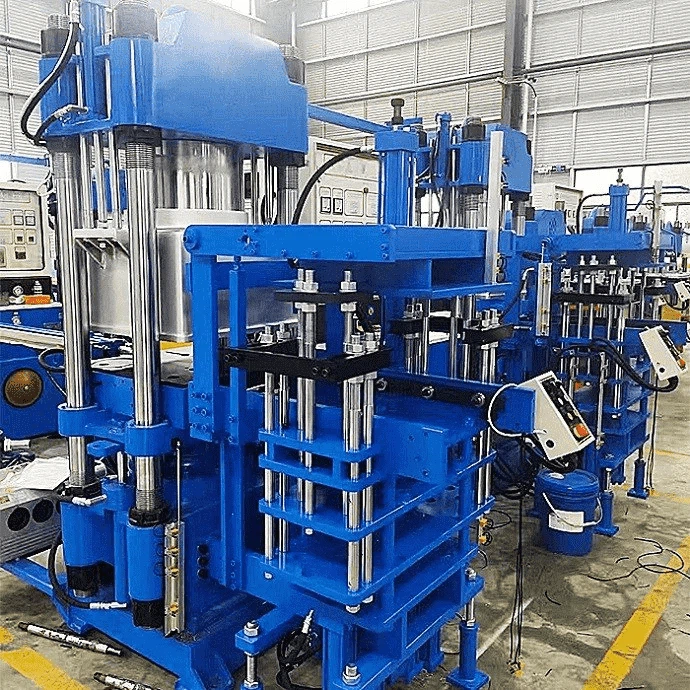
Industrial manufacturing relies heavily on vulcanizing press machines as an integral component in producing rubber goods, from automotive tires to industrial seals. These machines transform raw rubber into durable goods through heat and pressure during the vulcanization process - from automotive tires to seals; from these press machines comes high performance rubber products meeting industry standards.
What Is a Vulcanizing Press Machine?
A vulcanizing press machine is specialized equipment designed to apply heat, pressure and specific chemicals to raw rubber in order to initiate its vulcanization process. Vulcanization strengthens rubber by creating cross-links between polymer chains which form cross-linkages within rubber molecules - this improves elasticity, durability and heat resistance of rubber compounds.
These machines ensure rubber products have the necessary mechanical and chemical properties to withstand various industrial applications. A vulcanizing press consists of heated plates which compress rubber within a mold to give it its desired shape and properties.
How Vulcanizing Press Machines Work?
Mold Prep: To create the final shape and size, the mold must first be cleaned thoroughly and treated with a release agent to keep rubber from adhering to itself.
Rubber Loading: Once prepared rubber has been placed into the mold cavity, further processing takes place before loading onto it.
Heat and Pressure Application: The press uses specific temperatures and pressures depending on the type of rubber material and product requirements. Curing Time: For maximum vulcanization success, heat and pressure must remain on for a set period to complete vulcanization process.
Cooling and Demolding: Once cured, the product must be cooled before its mold can be opened to release its finished item. Temperature, pressure and curing time parameters must all be strictly adhered to ensure consistent quality results.
Types of Vulcanizing Press Machines
Vulcanizing press machines come in various configurations to fit different industries and applications:
1. Compression Molding Press
This is the most prevalent form, in which rubber is directly placed into a mold cavity before the press applies pressure to shape and cure the material. Often used for simple designs such as gaskets and seals.
2. Transfer Molding Press Typically utilized for complex designs like gaskets and seals.
3. Injection Molding Press
Injection molding involves forcing rubber through a transfer system into the mold cavity at high pressure to ensure uniform material distribution, while meeting complex design needs. Ultimately, injection molding presses provide more consistent material distribution as they apply pressure directly onto a closed mold to inject rubber at high rates of speed into its cavity.
Automated Process For Mass Production
This approach to manufacturing complex parts is highly automated and ideal for mass production of intricate components.
Tire Vulcanizing Press These presses were specifically created for vulcanizing automotive and industrial tires, with precise controls over pressure and temperature to guarantee uniform tire quality.
Application of Vulcanizing Press Machines
1.Tire Production for Cars, Trucks and Specialized Tyres: Vulcanizing press machines play a pivotal role in producing tire assemblies for car, truck and specialty use.
Rubber Seals and Hoses: Provide durability and flexibility to automotive components.
2.Construction and Infrastructure Conveyor Belts: Heavy-duty press machines produce robust conveyor belts suitable for industrial use.
Expansion Joints: These flexible rubber joints create flexible bridges and pipelines. Expandision Joints also come into play here as flexible rubber joints which ensure flexible expansion joints on bridges and pipelines are constructed and expanded smoothly and durablely over time. Expandision Joints are often found between expansion joints that increase flexibility over time ensuring long service lives on infrastructure projects involving construction projects and infrastructure improvements.
3.Shoe Soles: Vulcanization provides durability and elasticity for footwear soles, while presses produce rubber mats with consistent thickness and strength.
4. Aerospace and Marine Industries
Used to produce high performance seals that withstand extreme environments, as well as create thick rubber mats with consistent thickness and strength.
5. Medical Industry
Press machines are commonly used for manufacturing rubber components for medical devices, and require specific features in a press machine vulcanizing press machine to be successful:
1. Pressure and Temperature Capacity Machines should provide enough pressure and heat to ensure product quality, whilst
2. Automation
Modern machines often incorporate PLC (Programmable Logic Controller) systems for automation, increasing efficiency and consistency while customizing machine design to meet specific applications.
3. Customization The ability to tailor mold design and machine configuration allows users to meet application specific specifications while optimising energy consumption.
4. Energy Efficiency
Advanced insulation and heating systems help lower energy consumption, operating costs, and machine durability under demanding conditions.
5. Durability Longevity Machines constructed of high-grade materials offer long service life under demanding conditions.
Trends in Vulcanizing Press Technology
1 Automation and Smart Technology
Implementation of IoT (Internet of Things) allows real-time monitoring and control of key parameters without human intervention, thus reducing human intervention costs.
2. Energy Efficiency
Increasing focus on energy-saving designs such as advanced hydraulic systems or optimized heating elements for increased energy savings.
3. Customization for Niche Markets
Machines are being customized for emerging industries like EV (Electric Vehicle) manufacturing and renewable energy components production.
4. Eco-Friendly Materials
Use of eco-friendly rubber compounds and recyclable molds helps minimize environmental impact.
The challenge with Vulcanizing Press Machines
1 High Initial Investment.
Advanced vulcanizing presses can be costly for small-scale operations.
2. Maintenance Needs
Regular maintenance checks are crucial to prevent downtime and ensure peak performance of vulcanizing presses.
3. Skilled Labor
Operating and maintaining these machines require skilled personnel, increasing labor costs.
Care and Maintenance of Vulcanizing Press Machines
Regular Inspection: Inspect for wear-and-tear in hydraulic systems, seals, and heating elements to detect any wear.
Lubrication: Lubricate moving parts regularly to reduce friction and overheating.
Calibration: Regularly calibrate temperature and pressure controls in order to maintain accuracy. Cleaning: Keep mold cavities and platens clean to minimize defects in finished products.
Vulcanizing press machines are essential tools in the rubber manufacturing industry, enabling the creation of high-quality products to meet various industrial requirements. As advanced automation and energy efficiency technologies emerge, these machines continue to advance further with greater precision and productivity for automotive, construction, consumer goods or any other use imaginable. They represent essential tools in modern manufacturing.