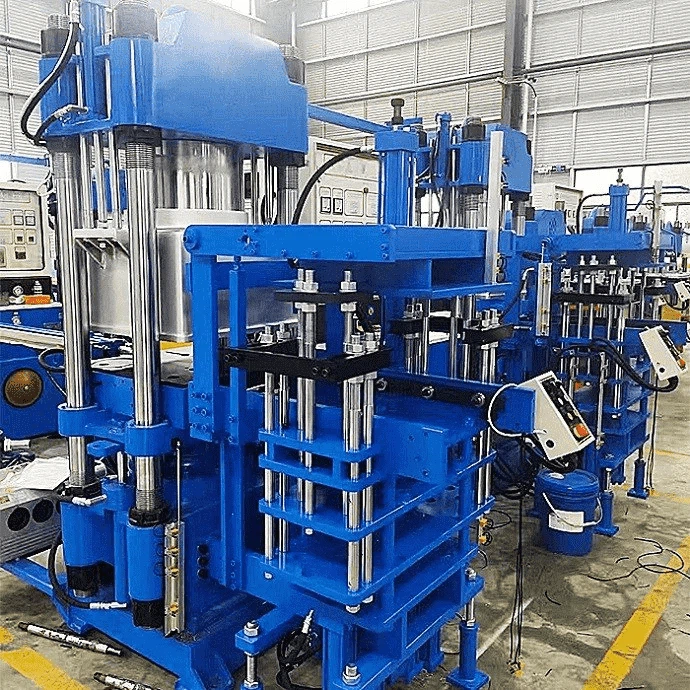
Vulcanizing press machines play an integral part in rubber manufacturing industries, helping produce a range of rubber products from tires and hoses, through gaskets, seals, footwear and footwear to tires themselves. Their primary function involves curing rubber - a chemical process which gives the material its durability, strength and elasticity - so when mass production comes along it can be asked whether vulcanizing presses are suitable for mass production? Upon hearing this answer it should come as these machines were built not only to handle high volumes of production but also maintain efficiency as well as ensure consistency of final output product.
1. High Efficiency in Large-Scale Production
Vulcanizing press machines are perfect for mass production due to their efficiency. Specifically designed to manage a continuous production cycle, vulcanizing presses help manufacturers produce large amounts of rubber products in an expedient manner - whether at a tire manufacturing plant or rubber hose factory, vulcanizing presses help maximize production times while minimizing downtime.
* Automatic Operation: Modern vulcanizing presses feature automated controls that make curing processes faster, with minimal human intervention, yielding consistent results across larger batches of products. This ensures faster cycle times, reduced human intervention costs, and faster cycle times overall.
*High Throughput: Vulcanizing presses have the capability of simultaneously processing multiple items at the same time depending on their design and product being produced, greatly increasing output while also guaranteeing each piece undergoes the same curing process and therefore maintaining uniform quality across each item produced. This multi-unit production greatly boosts output while simultaneously maintaining uniform quality throughout.
High efficiency is especially essential in industries with high demands, like the automotive sector, which demands thousands of tires or rubber components daily.
2. Consistent and High-Quality Products
Mass production often demands the right balance between speed and product quality, and vulcanizing press machines can help provide it. With precise temperature, pressure regulation, and time settings to ensure each rubber item undergoes the exact same curing process for consistent quality across an entire batch.
* Precise Temperature Control: Vulcanizing presses feature precise temperature control systems that ensure even heat distribution throughout the machine, helping ensure rubber products are fully cured without overheating or under-curing, which could result in defects.
* Pressure Regulation: For items like tires where structural integrity and uniformity are of utmost importance, machines apply consistent pressure during curing to ensure that it forms its desired shape and properties. This step ensures optimal curing results.
Machines designed for mass production ensure that each product satisfies specifications, reducing chances of defects while consistently meeting quality control standards.
3. Ability to Manage Complex Shapes and Large Quantities Vulcanizing presses have the capacity to produce standard rubber products as well as more complex and intricate designs, making them suitable for mass-produced rubber goods with different shapes, sizes, thicknesses or dimensions.
* Customization: Vulcanizing press machines can be tailored to meet the unique requirements of different industries. For instance, custom molds may be created specifically for tire production to provide for precision designs that match up with its specific product requirements.
* Large Capacity: Many modern vulcanizing presses are built with large mold capacities, providing efficient mass production environments with time savings and efficiency advantages. This feature can make mass production runs run more smoothly.
No matter if it be automotive parts, industrial rubber components or even consumer goods, vulcanizing presses offer the flexibility and capacity needed for large-scale production runs of various products.
4. Reduced Labor Costs and Human Error Mass production processes rely heavily on automation in order to achieve consistency while simultaneously lowering costs and labor requirements. Vulcanizing press machines used in large-scale production typically feature fully automatic features to cut manual labor requirements while simultaneously ensuring precise curing processes with reduced human error and error margins.
Automated Controls: Modern curing machines often feature programmable controls that enable manufacturers to set specific curing times, pressures, and temperatures for different products. Once these parameters have been set, the machine typically runs autonomously with minimal human interaction required for operation.
Monitoring and Reporting Systems: Modern vulcanizing presses often come equipped with monitoring and reporting systems that provide real-time data on the curing process, helping operators identify any issues early on and make adjustments as necessary; further minimizing errors.
Automation allows manufacturers to increase throughput while using fewer resources, making production more flexible in response to fluctuating demands.
5. Energy Efficiency and Cost-Effectiveness
Cost control in large-scale production is of utmost importance, which is why vulcanizing press machines have been engineered with advanced heating systems designed to minimize energy use while guaranteeing rubber products are properly cured.
* Energy-Saving Features: Modern vulcanizing presses often feature electric or steam heating systems designed to minimize energy waste, while their design facilitates faster warm-up and cool-down times, further decreasing energy requirements per production cycle.
* Reduced Material Waste: With precise control over temperature and pressure settings, vulcanizing presses minimize material waste and defects for improved product quality and reduced costs associated with scrap material management - two key considerations when manufacturing large volumes.
Energy efficiency and reduced waste production costs are important considerations for manufacturers operating on a large scale.
6. Versatility across Industries
Vulcanizing presses have applications across multiple industries and sectors, from mass production of rubber materials and product requirements for mass manufacturing in various fields to being an affordable means for handling various rubber material types and product requirements.
Vulcanizing presses play a central role in tire manufacturing, where high-quality and long-wearing tires are essential. These presses ensure each tire is uniformly cured to meet performance characteristics such as tread strength, flexibility and wear resistance.
*Rubber Hoses and Seals: Rubber hose and seal machines are often utilized in manufacturing rubber hoses, seals, gaskets, and other molded rubber components that must meet stringent quality and reliability standards. Due to their efficiency in maintaining consistent quality and efficiency standards for these applications requiring high levels of strength and dependability.
From automotive parts to industrial components, vulcanizing presses are indispensable tools in large-scale production across many industries.
Vulcanizing press machines are highly-suited to mass production environments. Their ability to provide high efficiency, ensure consistent product quality and manage large production volumes makes them indispensable in industries reliant on rubber goods - be they tires, hoses, seals or custom rubber components. From tires and hoses through seals and custom components; vulcanizing presses offer versatility, automation and precision necessary for mass manufacturing environments - remaining at the core of efficient and high-quality rubber production as manufacturing evolves further.